.svg)

Financial Services Data Security: AI & Privacy Best Practices
A practical guide to AI data security for financial advisors.

Financial Services Data Security: AI & Privacy Best Practices
Financial services firms now face the second-highest average data breach cost of any sector, reaching $5.56 million per incident, according to IBM's 2025 Cost of a Data Breach Report. At that level, a breach can devastate a firm's financial standing and the client trust it took years to build.
The risk can grow sharper as AI tools become standard across advisory practices. That same report found 97% of AI-related breaches hit firms lacking proper access controls.
AI can be a powerful tool for your advisors, but it shouldn’t come at the expense of your firm’s security posture. This guide gives advisors and firm leaders a practical foundation for financial services data security, covering your firm's shifting risk profile, existing regulatory obligations, the Financial Services AI Risk Management Framework (FS AI RMF), and the AI privacy best practices and controls your firm should have in place.
Key Takeaways
- AI adoption can intensify existing regulatory obligations under Gramm-Leach-Bliley Act (GLBA), Regulation S-P, and the FTC Safeguards Rule, making documented vendor oversight and written security policies mandatory for advisory firms using AI tools.
- The FS AI RMF gives firms a scalable governance structure that regulators are already beginning to treat as a supervisory reference point.
- Shadow AI, prompt injection, and agentic AI permissions represent the three highest-priority exposure points, and all three respond to policy and access controls.
How AI Can Change the Threat Model for Advisory Firms
AI introduces threat categories that a firm's existing security posture may not cover. Traditional controls like firewalls and SOC 2-attested CRMs don't account for systems that ingest client data, generate outputs influencing financial decisions, and execute autonomous workflows.
The sections below break down where those gaps show up and what firms should understand about each of them.
1. AI-Specific Threat Vectors Firms Need to Understand
Prompt injection embeds malicious instructions inside a document, transcript, or client-submitted form, and the AI processes them as legitimate input, potentially altering meeting summaries, exposing client PII (personally identifiable information), or redirecting AI-generated recommendations.
Model inversion attacks work at a deeper level. An attacker reverse-engineers a trained AI model to extract data it learned from. This means client records can surface at the model architecture level, not just at the network perimeter.
AI hallucination creates a separate exposure category. AI systems can produce confident but factually incorrect outputs, and in financial planning or compliance documentation, those errors can reach clients before anyone catches them.
Shadow AI ties these risks to a governance problem rooted in firm policy. The Microsoft and LinkedIn 2024 Work Trend Index found that 78% of workers who use AI bring their own tools to the job, often without IT or compliance review.
When those tools enter a regulated advisory practice without oversight, client data reaches systems with unknown security postures, and IBM's 2025 report found that firms with high shadow AI usage faced breach costs $670,000 above average.
Existing Regulatory Obligations for Advisors
Financial services firms occupy two roles at once in the AI era. As data stewards, they're accountable for protecting client information under GLBA and Regulation S-P. As AI tool adopters, they're selecting and deploying third-party platforms that access the same data. Both roles carry compliance weight, and AI adoption intensifies the requirements in each.
The Gramm-Leach-Bliley Act is the foundational federal law governing consumer financial information. Its Safeguards Rule requires a written information security program, and any AI tool processing client data falls within that program's scope.
The SEC's 2024 amendments to Regulation S-P added a formal vendor oversight obligation requiring written policies and documented risk assessments for each service provider. Advisors with $1.5B or more in AUM were required to comply by December 3, 2025, and smaller advisers faced a June 3, 2026, deadline.
Collecting SOC 2 Type II reports is a standard mechanism for meeting that documentation requirement, a process our SOC 2 Compliance for Financial Advisors guide covers in detail.
Many independent RIAs may also fall under the FTC's updated Safeguards Rule, which adds specific technical control requirements. Firms should confirm applicability with a compliance professional.
Advisors serving EU-based clients or California residents may carry additional obligations under GDPR and CCPA/CPRA, including provisions covering AI-assisted decision-making. Data privacy counsel can help assess specific exposure.
The Governance Framework Now Defining AI Risk in Financial Services
In March 2026, the U.S. Department of the Treasury, coordinated through the Cyber Risk Institute and the Financial Services Sector Coordinating Council, released the Financial Services AI Risk Management Framework with input from more than 100 financial institutions. The sections below break down what that means for advisory practices.
1. The FS AI RMF and What 230 Control Objectives Mean for Advisory Firms
The FS AI RMF adapts the NIST AI RMF to the regulatory and operational context of financial services, spanning governance, data integrity, model development, validation, monitoring, third-party risk, and consumer protection. Its 230 control objectives scale across any stage of AI adoption, making it as relevant for a solo RIA as for a $10B firm.
Lowenstein Sandler's March 2026 analysis flagged that examiners may ask for evidence of AI governance controls mapped to this framework before any formal rule requires it, so firms that build auditable governance now position themselves ahead of that expectation.
The Treasury also released the AI Lexicon alongside the framework, a standardized vocabulary closing the gap that forms when a firm and its vendor define terms like "human oversight" differently.
2. Vendor Due Diligence Under the AI Governance Standard
Third-party risk is one of the FS AI RMF's explicit control categories, making vendor due diligence a defined governance requirement for advisory firms.
A credible vendor risk assessment for RIA firms should cover SOC 2 Type II attestation status, whether client data trains vendor models without consent, which systems the tool can access, and what the vendor's incident notification timeline looks like.
Firms that want a deeper walkthrough on reading a vendor's SOC 2 report, understanding the five Trust Services Criteria, and spotting exceptions can find that guidance in our dedicated SOC 2 Compliance for Financial Advisors guide.
Practical Controls Every Advisory Firm Using AI Should Have in Place
Each of these five controls targets a specific gap that AI adoption creates within a firm's existing security infrastructure.
1. Written AI Acceptable Use Policy
A written AI acceptable use policy documents which tools the firm has approved, what client data can and cannot go into each one, and what review process applies before AI-generated content enters a client record or communication. That makes it both a governance control and a Regulation S-P compliance mechanism.
2. Vendor Inventory and Review Schedule
Every AI tool accessing client data needs documentation detailing which data it touches, under which permissions, and when the firm last reviewed its SOC 2 report. IBM's 2025 report found that 63% of organizations lack formal AI governance policies to manage shadow AI risk, and a documented vendor inventory is where that gap starts to close.
3. Access Control Scoping
Each AI tool should carry only the minimum access required to perform its function. In a multi-system advisory stack, each integration connection warrants its own review rather than blanket read/write access.
4. Incident Response Plan
The firm's incident response plan should address AI-related events specifically, covering what constitutes a reportable incident, who handles Regulation S-P notification, the notification timeline vendors are required to meet in the event of a breach, and how the firm documents the event for regulators.
5. Staff Training
An employee pasting client data into an unapproved consumer AI tool is the most common exposure point. Periodic training on approved tools, acceptable use, and escalation procedures addresses it directly.
What Privacy-First AI Tools Do to Reduce Your Firm's Exposure
The threat vectors covered earlier don't affect all AI tools equally. Privacy-first tools address several of them through architectural decisions made before a firm ever onboards.
No-recording architectures mean there is no audio or video file artifact that needs to be managed: For AI tools that do record, some firms elect to delete recordings once a meeting is processed. Others that save them must supervise and archive them, so they’re discoverable. A no recording solution (like Zocks) eliminates the risk.
Data minimization limits what a tool can expose: When a tool processes only what a task requires, a misconfigured permission or prompt injection event carries a smaller blast radius.
Client data that doesn't train vendor models stays within the firm's control: When a vendor commits to not using firm data for model improvement, the model inversion risk described earlier doesn't extend to your clients' records.
PII redaction reduces the surface area of what an AI tool can expose: When an AI assistant can strip or mask PII (names, Social Security numbers, account numbers) before processing, that data never reaches external servers in identifiable form.
Encryption matters whether data is in transit or at rest: Sensitive personal and financial information needs to stay protected from unauthorized access, whether it’s moving across the network or sitting in storage.
Client consent should be required before recording or processing conversations: This ensures that data is only collected when the client has knowingly agreed, which respects their autonomy and aligns with regulatory expectations around disclosure.
Data retention limits how long a breach window stays open: The longer a vendor retains client data, the longer that data is exposed to future incidents. Firms should confirm that a vendor's retention schedule is defined, documented, and aligned with their own regulatory obligations — not left to vendor discretion.
SOC 2 Type II attestation verifies these commitments through an independent audit: A certified vendor has demonstrated its security controls to a third-party auditor, giving firms the documented vendor assessment that Regulation S-P requires.
The Privacy-First AI Platform Built for Financial Advisors
Zocks is the #1 AI assistant for financial advisors, built for the privacy and compliance requirements regulated practices have to meet.
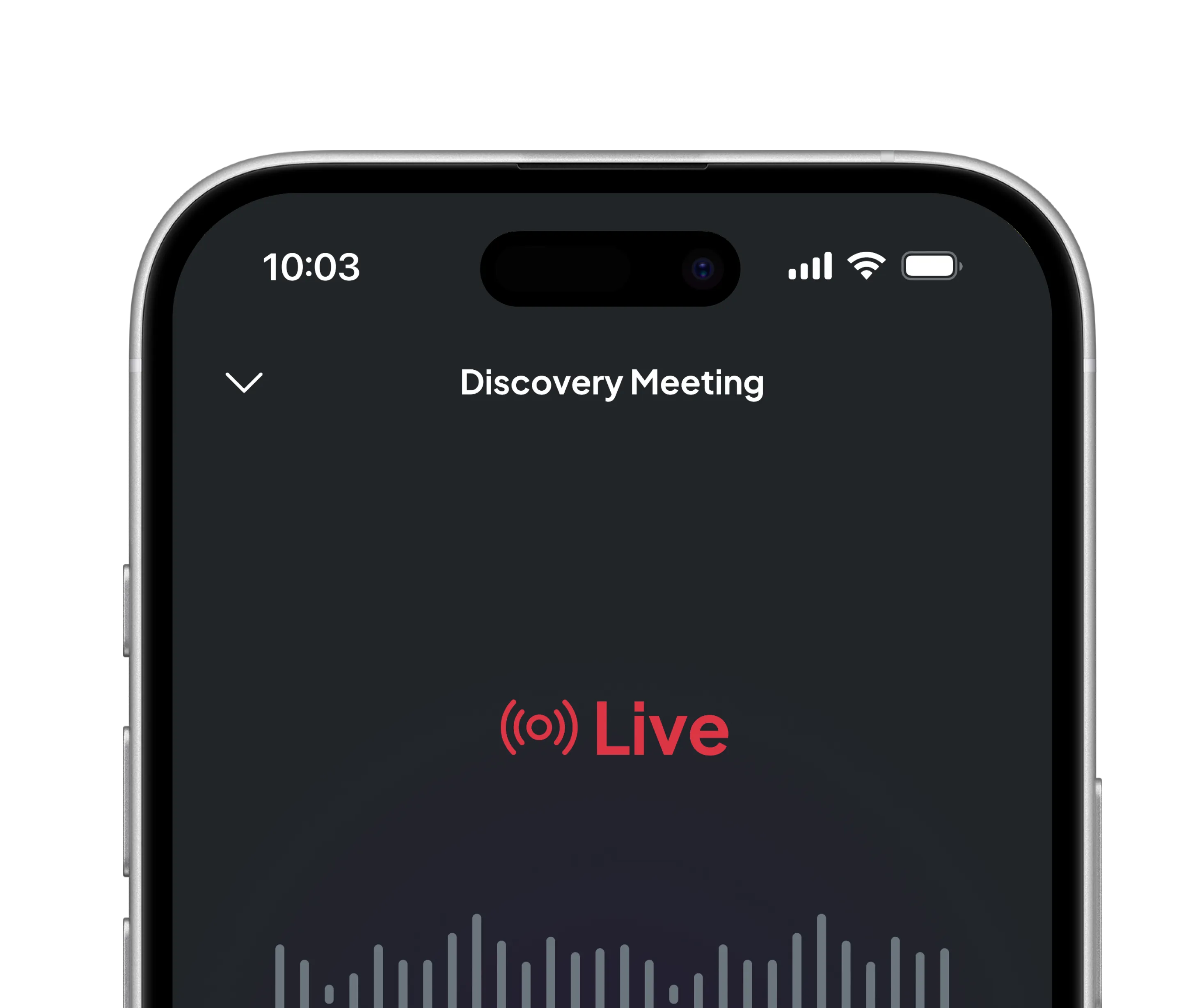
While most AI note-takers record audio and video, Zocks doesn't record conversations. This means there’s no audio file to store, transmit, or expose. Advisors get the time savings of a note-taker without adding a new point of exposure for client data.
Zocks is also SOC 2 Type II compliant, and client data is never used to train or improve LLMs, so advisors can use AI to save time without putting client trust on the line.
Frequently Asked Questions
What is the biggest data security risk AI creates for financial advisors?
The biggest AI-related data security risks for financial advisors are shadow AI, prompt injection attacks, and agentic AI exposure. Shadow AI exposes client information through unauthorized tools, prompt injection can manipulate AI outputs, and agentic systems can widen the attack surface through connected integrations. IBM's 2025 report found that 97% of AI-related breaches occurred where access controls were missing.
What is the Financial Services AI Risk Management Framework?
The U.S. Department of the Treasury released the Financial Services AI Risk Management Framework (FS AI RMF) in March 2026, developing it through the Cyber Risk Institute and the Financial Services Sector Coordinating Council with input from more than 100 financial institutions. It includes 230 operational control objectives covering governance, data integrity, model risk, third-party risk, consumer protection, and other AI lifecycle controls for firms of all sizes.
Are financial advisors required to have an AI governance policy?
No regulation currently requires financial advisors to maintain a document specifically called an AI governance policy. However, existing obligations under Regulation S-P, the GLBA Safeguards Rule, and FINRA supervision requirements generally necessitate documented oversight of AI tools that access, process, or store client information.
What is shadow AI, and why does it matter for firms?
Shadow AI refers to AI tools employees use without firm approval, security review, or compliance oversight, including consumer AI assistants, browser extensions, and third-party platforms. When employees enter client information into unapproved tools, firms lose visibility into security controls and data handling practices. IBM's 2025 report found that shadow AI increased average breach costs by $670,000.
What should an advisor ask before adopting a new AI tool?
Before adopting an AI tool, advisors should evaluate the vendor's SOC 2 Type II status, determine whether the vendor uses client data for model training, review integration permissions and system access, confirm incident notification obligations and timelines, and ensure the tool fits within the firm's written information security program and governance framework.
Disclaimer: This guide is for educational and informational purposes only. It does not constitute legal, compliance, or cybersecurity advice. Regulatory requirements vary based on your firm's registration type, AUM, state of operation, client base, and individual circumstances. Consult your compliance officer, legal counsel, or a qualified regulatory professional before making decisions about data security frameworks, AI governance policies, or vendor selection.
Ask AI About this Topic
ChatGPT | Claude | Perplexity | Grok | Google AI Mode
Related blogs
Get started for free in less than 10 minutes