.svg)

Introducing Zocks MCP: When Claude Knows Your Clients
Connect AI to client conversations with Zocks MCP, enabling personalized outputs and deeper insights.

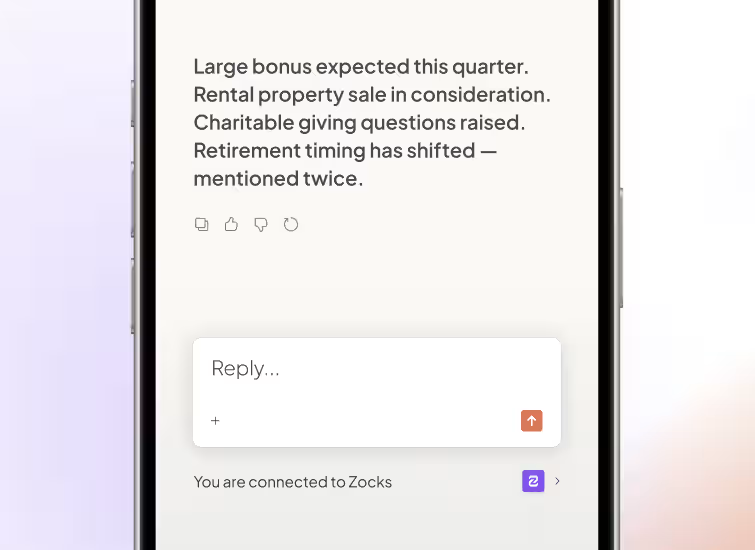
Today we're launching Zocks MCP.
The idea is simple: AI tools like Claude can now read your actual client conversations captured in Zocks — and produce personalized work that reflects what your clients have actually said.
The gap we've been closing
AI tools are powerful. But for financial advisors, they've been missing the most important context: what clients actually said in meetings.
Most advisors have already tried the workaround — exporting transcripts, copying CRM notes, pasting it all in and hoping for something useful. It helps, but it's always incomplete. And none of it compounds over time.
The richest client context advisors have lives in conversations. And until now, AI tools had no way to access it.
What MCP is — explained simply
MCP — Model Context Protocol — is a technical standard that works as a bridge between AI tools and data sources.
Think of it like onboarding a new team member. One of the first things you do is give them access to your systems — your notes, your client files, your history together. Without that context, they can't do much for you. MCP works the same way. It's a secure connection that gives an AI tool like Claude access to everything in your Zocks account — your client's full meeting history, profiles, goals, and planning signals.
When Claude connects to Zocks via MCP, it can read your client's full meeting history — everything Zocks has captured across conversations — and reason across that context to produce answers and deliverables that are specific to that client. And what Claude receives isn't raw transcripts — it's structured client intelligence built from conversations, AI-generated summaries, client profiles, and meeting history.
Not a template. Not a generic output. Work grounded in what your client actually said.
What advisors can do with it today
There are things advisors have never been able to ask an AI tool before — because the AI had no access to the right data. Now they can.
On April 8 we're doing a live demonstration showing exactly what this looks like. But here's a taste of the kinds of questions advisors can now ask Claude:
- "Draft a personalized tax opportunity summary for this client based on everything they've told me."
- “The Garcias mentioned a business sale twice last year. Where did that conversation go and what should I ask next?”
- "Create an annual review letter for this client that summarizes the major points we’ve discussed."
- “Draft a LinkedIn post based on my last client conversation about ‘tax planning strategies for large inheritances.”
In every case, Claude isn't guessing. It's reading your actual Zocks conversation history and producing output specific to that client — not a template that could apply to anyone. That means finished, client-ready work. Imagine handing a high-net-worth client a beautifully formatted summary of your last conversation — personalized insights, key planning signals, and recommended next steps, branded to your firm and ready to share.
The difference this makes
Work that simply wasn't possible before is now possible at scale. A visual client relationship timeline built from five years of conversations. A branded tax opportunity summary personalized to what this client actually said. An annual review letter that sounds like you wrote it — because it's built from everything you know about them. Every client gets the same depth of attention. Every client feels like your only client.
Watch the replay of our demo
We hosted a live demonstration on April 8 showing exactly what this looks like — starting with a live tax analysis demo using real Zocks conversation data, right inside Claude.
Zocks MCP is available now. If you'd like to see what this looks like in your own practice, book a demo.
Related blogs

Get started for free in less than 10 minutes