Is Your AI Note-Taker an E&O Asset or a Liability?
An AI note-taker can close E&O documentation gaps or create new ones. See what insurance carriers expect and four tests for an E&O-ready AI assistant.

A client tells your CSR, "Let's skip cyber for now." Your AI note-taker catches it, somewhere in minute 14 of a 22-minute transcript. But then two years later, that client has a breach and no coverage.
The question in that E&O claim won't be whether the words were recorded. It will be whether your agency documented the decision, confirmed it with the client, and can find it.
Many agencies have added an AI assistant to their phones or video calls to increase productivity. But for an agency owner, how does that tool impact your E&O exposure? Used well, it closes the documentation gaps behind many claims. Used carelessly, it creates a new kind of record you can't stand behind.
Key takeaways:
- Most agency E&O claims start with ordinary documentation misses, not bad coverage calls.
- A generic AI transcript isn't an E&O record. Decisions get buried, notes are hard to search, and summaries go unreviewed.
- Carriers like Utica National expect human review of AI output, with clear policies around it.
- Four tests show whether your AI assistant reduces E&O risk or adds to it.
Why documentation is where E&O claims start
Most agency E&O claims stem from seemingly routine oversights, such as failing to document a conversation, to confirm a client's decision, or to follow up on a request after submission.
E&O carriers have been clear about this for years. Utica National, which writes agents' E&O through state associations, warns that when a dispute comes down to "he said, she said," the client is likely to win. It recommends that agents document conversations immediately, in enough detail that a colleague could pick up the account, and then confirm the conversation back to the client in writing.
Every agency owner knows this. The problem is that it depends on every producer, account manager, and CSR doing it on every call, on their busiest day. That's what an AI assistant promises to solve.
A transcript is not a record
Most AI note-takers and assistants were built for general business meetings. They produce a transcript and a summary, then stop. For an insurance agency, that leaves three gaps.
The decision is buried. "Let's skip cyber for now" sits inside a paragraph of small talk. Nothing flags it as a coverage decision, and nothing prompts anyone to confirm it in writing.
The record can't be searched. Generic tools save each call as its own transcript. When a dispute comes up two years later, your team is scrolling through transcripts trying to find the one that mattered. And you can't ask a simple question across your book, like which clients declined cyber this year.
Nobody checked it. An unreviewed AI summary can be wrong. It might drop the effective date, mix up two vehicles, incorrectly attribute statements to the wrong speaker, or describe a quote as bound. If that summary lands in the client file as-is, you've documented something that didn't happen.
None of this means agencies should avoid AI. It means an AI assistant is only an E&O asset if it's built to produce the kind of record your E&O carrier expects.
What E&O carriers say about AI transcription
Utica National has published a sample AI transcription governance policy for agencies to adapt. It's a useful benchmark for any tool you're evaluating and highlights the importance of having a human in the loop:
- Review before reliance. Transcripts, summaries, and action items should be checked by an employee before anyone relies on them, sends them, or makes a decision from them.
- AI doesn't replace your file standards. Employees remain responsible for documenting coverage discussions, recommendations, and declinations in the AMS.
- Treat summaries as drafts. Until reviewed, an AI summary is a draft note, not the official record. If it differs from what was said, the underlying transcript and communications may become evidence.
- Know where the data goes. Agencies should understand where transcripts are stored, how long they're kept, who can access them, and whether the vendor uses them to train models.
- Show who reviewed it. Where agency policy calls for it, label AI output with a line like "Generated by AI, reviewed by [name] on [date]."
The sample also covers notifying participants before a conversation is transcribed. As always, adapt any sample policy with your own counsel and E&O carrier.
Four tests for an E&O-ready AI assistant for insurance agencies
Whether you're choosing a tool or reviewing the one your team already uses, run it through these four tests.
1. Does it capture what matters for E&O, or just what was said? A renewal review and a vehicle-add request carry different risks. The note should pull out the things your procedures care about: coverages discussed, client decisions, exposure changes, requests, effective dates, and what your agency promised to do next. Ask the vendor: Can I define the fields captured for each type of conversation?
2. Can you trace the note back to the source? A summary without its source is hard to defend. The strongest record connects the client file to the structured note to the original call or email. Ask: If a client disputes this note in two years, what can I show them?
3. Does someone on your team review it before it counts? AI should draft. Your team should approve. That applies to the note and to the follow-up email confirming the conversation with the client. Ask: Who approved this, when, and what did they change?
4. Can you find it when it matters? A record only protects you if you can produce it fast. You should be able to search one client's full history, or ask a question across your whole book, and land on the original conversation. Ask: cCan I pull up every declined coverage across my book in under a minute?
A simple rule for what AI can do on its own
The easiest way to put guardrails around AI is to sort the work into three levels. Here’s an example of what to write into your procedures manual and train your team on:
Most of the hours your team loses each week sit in green and yellow. E&O judgment calls are flagged as red, to be reviewed by a licensed professional.
How Zocks helps agencies pass all four tests
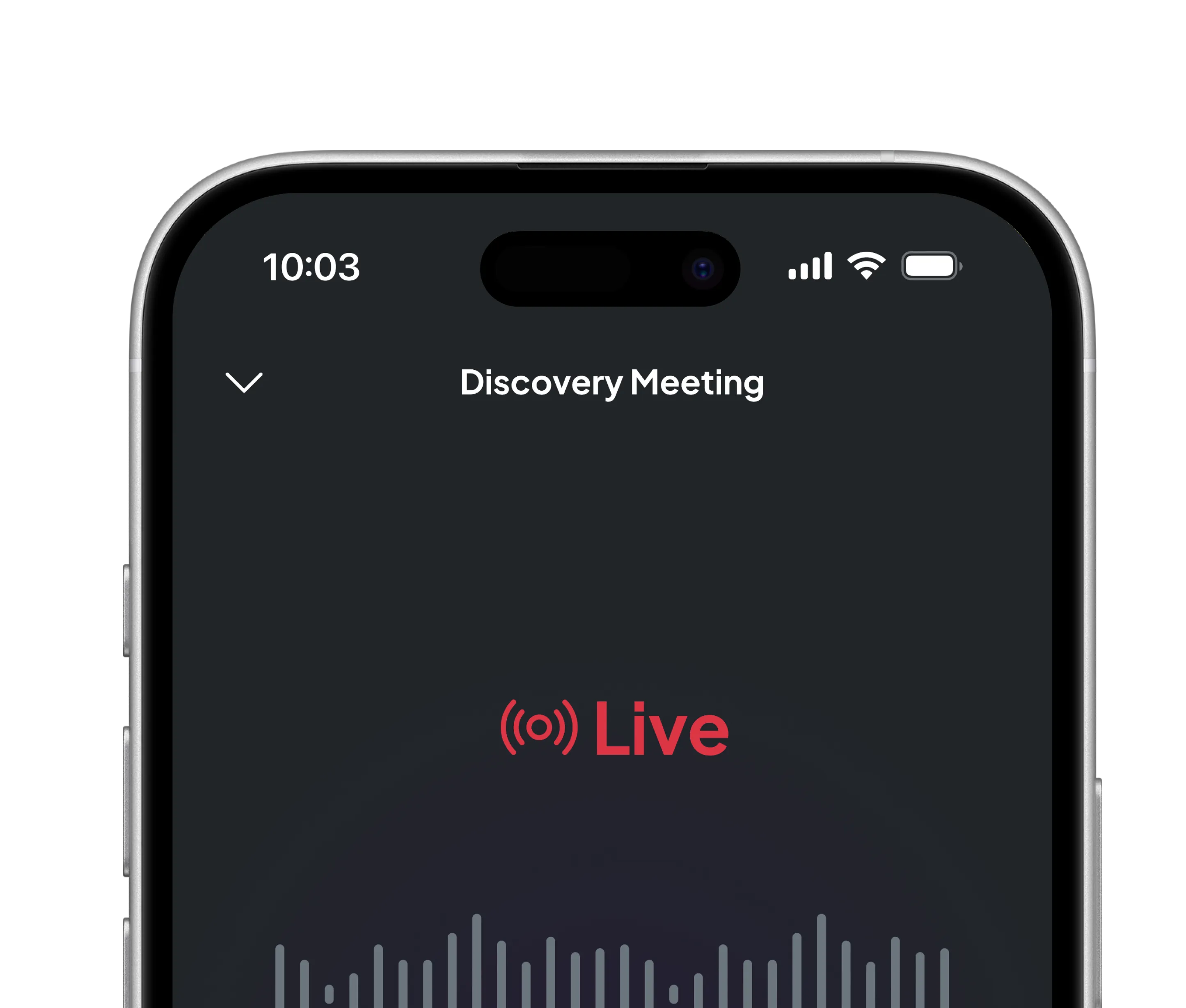
Zocks was built for regulated financial services, where a note has to be accurate, complete, and defensible. Here's how it works for an agency:
- Every client call, meeting, and email becomes a structured activity log. Coverages discussed, client decisions, requests, and next steps are synced to the right fields consistently, not as a wall-of-text transcript.
- Your team stays in control. Zocks drafts the note and the follow-up email confirming the conversation. Your producer, account manager, or CSR reviews and sends.
- Your whole book becomes searchable. Ask about one client or across every client, like which accounts declined umbrella this year, and get the answer with a citation to the original conversation.
- Built for sensitive conversations. Zocks is SOC 2 Type II compliant and transcription-only. It never records audio or video.
The payoff is two-sided. Your team gets back 10+ hours per person each week. And you get documentation that's consistent across every producer and CSR, including new hires.
More than 5,000 firms trust Zocks, and it's the #1 rated AI Assistant for Financial Services on G2.
Make your strongest E&O procedures the default way work gets done. Book a demo with us to see how Zocks documents a real client conversation, start to finish.
Frequently Asked Questions
Does my E&O carrier allow AI note-takers and AI assistants? Carriers are planning for agencies to use them. Utica National has published a sample AI transcription policy for agencies to adapt. The expectation is clear: approved tools, human review, and consistent documentation standards.
Can an AI summary replace my agency's file documentation? Not on its own. Until someone on your team reviews it, an AI summary is a draft. Your agency is still responsible for documenting coverage discussions, recommendations, and declinations.
Is client data safe in an AI tool? It depends on the vendor. Ask where transcripts and recordings are stored, how long they're kept, who can access them, and whether your data trains their models. Look for independent security validation, such as SOC 2 Type II attestation, HIPAA compliance, and advanced data retention policies at the object level. Also check that data captured is encrypted end-to-end in both transit and at rest.
What should an agency AI use policy include? At minimum: which tools are approved, how you notify clients, what requires human review, which conversations are off-limits, and how long data is retained. Revisit it at least once a year, and whenever your tools change.
This article is general risk-management information, and not legal advice. Agencies should set E&O procedures with their own counsel and E&O carrier.
Related blogs

Get started for free in less than 10 minutes